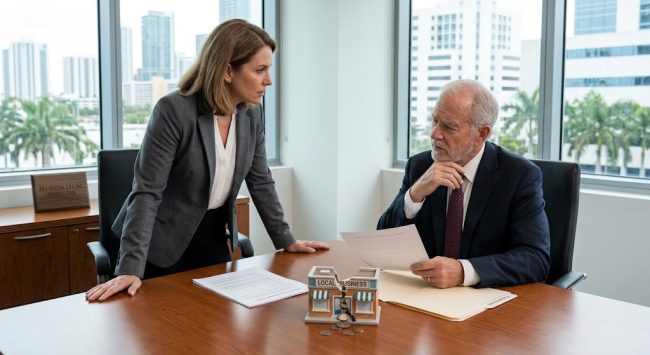
Quick Answer: Post-closing disputes in Florida business acquisitions usually involve purchase price and working capital adjustments, earn-out payments, indemnification claims for breached representations and warranties, fraud allegations, and enforcement of noncompetes against sellers. The purchase agreement controls most of these disputes, including notice deadlines, survival periods, caps, baskets, escrows, and dispute resolution procedures. Buyers and sellers should act quickly, follow contractual procedures exactly, and preserve deal records.
South Florida has become an active market for buying and selling businesses. Private equity firms, family offices, strategic buyers, and individual entrepreneurs acquire companies in construction, healthcare, logistics, hospitality, technology, and professional services. Founders are selling to fund retirement or to partner with larger platforms. Many of these deals close smoothly. Some do not. Once the wire clears, disagreements can emerge over what the buyer actually received and what the seller is still owed.
McArdle Franco PLLC, a Coral Gables law firm established in 2002, handles business acquisition disputes, shareholder disputes, and debt financing litigation in state and federal courts and in arbitration. The firm’s lawyers also structure and negotiate transactions, which gives its litigators a practical understanding of how deal terms are meant to work. As a Miami commercial litigation attorney team, the firm represents both buyers and sellers. This article explains the most common post-closing disputes and how they are resolved.
Common Post-Closing Disputes
| Dispute | What Is at Stake |
|---|---|
| Working capital adjustment | Purchase price true-up after closing |
| Earn-out | Contingent payments tied to future performance |
| Indemnification | Losses from breached representations or warranties |
| Fraud | Claims outside contractual caps and limitations |
| Escrow release | Who receives held-back funds |
| Seller noncompete | Former owner competing or soliciting customers |
| Employment of seller | Termination of seller-employee and its effect on payments |
| Seller financing | Buyer’s default on promissory note |
The Purchase Agreement Controls
Nearly every acquisition dispute turns on the purchase agreement. Florida courts generally enforce negotiated agreements between sophisticated parties as written. Key provisions include:
- Representations and warranties about financial statements, contracts, compliance, litigation, taxes, employees, and other matters
- Survival periods that define how long representations remain actionable after closing
- Indemnification provisions, including baskets, caps, and exclusive remedy clauses
- Purchase price adjustment mechanics and independent accountant procedures
- Earn-out definitions, accounting methods, and operating covenants
- Escrow and holdback terms
- Restrictive covenants binding the seller
- Non-reliance clauses limiting claims based on statements outside the agreement
- Dispute resolution clauses specifying courts, arbitration, venue, and governing law
A Florida contract dispute law firm will begin any acquisition dispute by mapping these provisions against the facts.
Working Capital and Purchase Price Adjustments
Most acquisitions adjust the purchase price after closing based on actual working capital, cash, debt, or other metrics compared to a target. The buyer typically prepares a closing statement, the seller has a set period to object, and unresolved disputes go to an independent accountant.
The Independent Accountant
Purchase agreements often route adjustment disputes to an accounting firm acting as an expert rather than an arbitrator, with authority limited to the disputed items. Courts have addressed whether this process is binding arbitration and which issues fall within the accountant’s authority. Disputes over whether a matter is an accounting question for the expert or a legal question, such as a breach of representation, for a court are common. Getting this classification right can determine the forum and the outcome.
Common Adjustment Issues
- Whether the closing statement followed the agreed accounting principles and past practices
- Treatment of reserves, accruals, and deferred revenue
- Classification of items as debt or working capital
- Inventory valuation
- Missing the objection deadline
Earn-Out Disputes
Earn-outs bridge valuation gaps by tying part of the price to post-closing performance, such as revenue or EBITDA. They are also one of the most frequent sources of litigation.
Typical Claims
Sellers often claim the buyer manipulated the metric, shifted revenue or expenses, changed accounting methods, integrated the business in a way that made performance impossible to measure, or failed to operate the business as required. Buyers often respond that they had discretion to run the business as they saw fit and that the shortfall reflected market conditions.
The Implied Covenant of Good Faith
Florida recognizes an implied covenant of good faith and fair dealing in every contract, but it cannot override express terms. If the agreement gives the buyer sole discretion to operate the business, the implied covenant may limit only arbitrary or bad-faith conduct. Earn-out provisions that include express operating covenants, such as maintaining separate books or minimum sales resources, provide sellers stronger protection.
Indemnification Claims
Notice Requirements
Purchase agreements typically require written notice of indemnification claims within the survival period, often with specific content requirements. A claim notice that is late or lacks required detail can be rejected. Buyers should send notice as soon as a potential claim arises, even before losses are fully known.
Baskets and Caps
Deductible-style baskets require losses to exceed a threshold before recovery and then allow recovery only above it. Tipping baskets allow recovery from the first dollar once the threshold is met. Caps limit total liability, often to a percentage of the purchase price, with higher caps for fundamental representations and fraud.
Exclusive Remedy Provisions
Many agreements make indemnification the exclusive remedy for breach of representations, except for fraud. That shapes which claims can be brought and where.
Sandbagging
Agreements may address whether a buyer can recover for a breach it knew about before closing. Where the agreement is silent, the law varies by jurisdiction, so the governing law clause and express language matter.
Fraud Claims
Fraud claims are attractive to buyers because they often fall outside caps, baskets, and survival limits. Sellers frequently respond with non-reliance clauses, in which the buyer acknowledges that it relied only on the representations in the agreement.
In Billington v. Ginn-La Pine Island, Ltd. (Fla. 5th DCA 2016), a Florida appellate court held that a clear non-reliance clause can bar a fraudulent inducement claim based on statements outside the contract. Florida courts continue to analyze the enforceability of these clauses based on their specific language and the facts. Fraud based on representations within the agreement itself is treated differently. Both buyers and sellers should understand how their agreement’s non-reliance language interacts with Florida law.
Escrow and Holdback Disputes
Escrow agreements require joint instructions or a final determination before funds are released. When a buyer submits an indemnification claim, the escrow agent typically holds the disputed amount until the claim is resolved. Sellers often seek declaratory relief to release escrowed funds when they believe claims are baseless or untimely.
Seller Noncompetes and Nonsolicits
Buyers pay for goodwill and expect the seller not to compete. Under Section 542.335 of the Florida Statutes, restrictive covenants tied to the sale of a business are presumed reasonable if they last three years or less and presumed unreasonable if they last more than seven years. Courts may not consider individualized economic hardship to the seller when enforcing them. Violation of an enforceable covenant creates a presumption of irreparable injury, which supports injunctive relief.
Disputes often arise when the seller also becomes an employee of the buyer and is later terminated. Whether the sale covenant or a separate employment covenant applies, and which time period controls, depends on the documents.
Seller Financing and Debt Disputes
Many smaller acquisitions include seller financing, with the buyer paying part of the price through a promissory note secured by business assets or a pledge of equity. When the buyer stops paying, the seller may sue on the note, enforce the security, and pursue guarantors. Buyers often defend by claiming offsets for indemnifiable losses. Whether setoff is permitted depends on the agreement.
Acquisitions financed by banks or private credit can also produce disputes over loan covenants, defaults, guaranties, and foreclosure. Florida’s Uniform Commercial Real Estate Receivership Act, Chapter 714, enacted in 2023, provides procedures for receiverships involving commercial real estate. Debt financing litigation is a regular part of McArdle Franco’s business litigation practice.
Representations and Warranties Insurance
Representations and warranties insurance (RWI) has become common in middle-market acquisitions. A buy-side policy allows the buyer to recover losses from breached representations directly from the insurer, often with a reduced indemnity obligation from the seller.
How RWI Changes Disputes
When RWI is in place, the dispute often shifts from buyer versus seller to buyer versus insurer. Policies exclude known breaches, certain categories of risk, and forward-looking statements, and they include retentions that the buyer must absorb before coverage applies. Claims require prompt notice and detailed proof of loss. Insurers retain subrogation rights against sellers only for fraud in most policies.
Practical Considerations
Buyers should coordinate the purchase agreement and policy so that definitions of loss, materiality scrapes, and survival periods align. Sellers should confirm that their exposure is truly limited to the agreed escrow or retention and that the policy’s subrogation waiver protects them. When an RWI claim is denied, coverage litigation or arbitration with the insurer may follow.
Employees, Customers, and Integration Problems
Many post-closing disputes arise from integration problems rather than contract language. Key employees may leave, customers may terminate contracts after a change of control, and systems may not transfer as expected. Buyers sometimes claim the seller knew of customer dissatisfaction or planned departures and failed to disclose them. Sellers sometimes claim the buyer’s integration decisions caused the problems.
Careful documentation during due diligence, clear disclosure schedules, and written transition services agreements help allocate these risks. When disputes arise, evidence about what was disclosed in the data room, in management presentations, and in schedules is often decisive.
Choosing the Forum
| Forum | Considerations |
|---|---|
| Independent accountant | Purchase price adjustments only, limited scope |
| Arbitration | Private, expert decision-makers, limited appeal |
| Florida state court | Business courts in some circuits, jury available |
| Federal court | Diversity jurisdiction, federal procedures |
| Mediation | Often required before or during proceedings |
Governing law and venue clauses also matter. Many acquisition agreements select Delaware law, while others choose Florida. The chosen law affects issues such as sandbagging, non-reliance, and the implied covenant.
Steps to Take When a Dispute Arises
- Review the purchase agreement and related documents, including escrow, employment, and note agreements.
- Calendar every deadline, including objection periods and survival dates.
- Send timely, detailed notices that meet contractual requirements.
- Preserve deal records, including data room contents, emails, and financial models.
- Engage forensic accountants to quantify adjustments, losses, or earn-out calculations.
- Evaluate fraud claims carefully in light of non-reliance language.
- Consider interim relief if the seller is competing or assets are at risk.
- Explore early resolution through negotiation or mediation.
Preventing Post-Closing Disputes
Disputes are less likely when agreements are clear. A South Florida business litigation law firm that also handles transactions brings litigation insight to drafting. Recommendations include defining accounting principles with examples, specifying earn-out operating covenants, setting clear claim notice procedures, using sample closing statements, and aligning the employment agreement with the restrictive covenant.
Related Disputes
Acquisitions often affect other relationships. A sale of a business may require assignment of commercial leases, and landlord refusals or disputes can delay closing or create post-closing claims. A South Fl commercial lease litigation attorney can address those issues. Acquisitions involving multiple sellers or rollover equity can also create disputes among the new co-owners, which may require a shareholder dispute attorney Miami businesses rely on. Local buyers and sellers can work with a Coral Gables business dispute lawyer at McArdle Franco’s Alhambra Circle office.
Frequently Asked Questions
What is a working capital adjustment dispute?
It is a disagreement over the post-closing calculation that adjusts the purchase price based on the business’s actual working capital compared to an agreed target. These disputes are often decided by an independent accountant under the purchase agreement.
Can I sue for fraud if my purchase agreement has a non-reliance clause?
Possibly. A clear non-reliance clause can bar fraud claims based on statements outside the agreement under some Florida decisions, but fraud based on representations within the agreement is treated differently. The specific language matters.
How long do I have to make an indemnification claim?
The survival period in the purchase agreement usually controls. Claims must generally be noticed in writing before the survival period expires, and fundamental representations often survive longer.
Is a seller’s noncompete enforceable in Florida?
Generally yes, if it is reasonable and protects a legitimate business interest. Covenants tied to the sale of a business are presumed reasonable at three years or less.
What can a seller do if the buyer stops paying the seller note?
The seller can sue on the note, enforce any security interest, and pursue guarantors. The buyer may assert setoff rights if the agreement allows.
Do earn-out disputes go to court or arbitration?
It depends on the purchase agreement. Some route earn-out calculation disputes to an independent accountant, while broader claims may go to arbitration or court.
Key Takeaways
- The purchase agreement controls most post-closing disputes.
- Missed notice and objection deadlines can forfeit valuable claims.
- Earn-outs need express operating covenants to protect sellers.
- Non-reliance clauses can limit fraud claims under Florida law.
- Sale-of-business noncompetes receive favorable presumptions in Florida.
About McArdle Franco PLLC
McArdle Franco PLLC is a Coral Gables law firm established in 2002 that counsels and represents businesses throughout Florida, across the nation, and internationally in business litigation, real estate, land development and construction, business structuring, and transaction structuring. The firm’s litigators practice in state and federal court and represent clients in arbitration, mediation, and administrative proceedings. The firm was named a Tier 2 firm in Miami for Litigation – Construction in the 2026 edition of Best Law Firms® and was ranked in Chambers USA 2025 for Litigation: General Commercial in Florida.
Contact McArdle Franco PLLC
Address: 255 Alhambra Circle, Suite 925, Coral Gables, FL 33134
Phone: (305) 442-2214
Email: info@mcper.com
Website: mcardlefranco.com
This article provides general information and is not legal advice. Consult a qualified attorney about your specific situation.
Sources and Further Reading
- Restraints of Trade or Commerce, Section 542.335, Florida Statutes – Florida Legislature
- Billington v. Ginn-La Pine Island, Ltd., 192 So. 3d 77 (Fla. 5th DCA 2016) – Florida Fifth District Court of Appeal
- Florida Uniform Commercial Real Estate Receivership Act, Chapter 714, Florida Statutes – Florida Legislature
- Uniform Commercial Code – Secured Transactions, Chapter 679, Florida Statutes – Florida Legislature
- Revised Florida Arbitration Code, Chapter 682, Florida Statutes – Florida Legislature
- Florida Business Corporation Act, Chapter 607, Florida Statutes – Florida Legislature
- Florida Revised Limited Liability Company Act, Chapter 605, Florida Statutes – Florida Legislature
- Federal Arbitration Act, 9 U.S.C. § 1 et seq. – U.S. Code
- Business Litigation Practice – McArdle Franco PLLC
- Best Law Firms 2026 and Chambers USA 2025 Rankings – McArdle Franco PLLC Press Release
About Brian French
Led by a commitment to tech-intelligent curation, Brian French researches corporate developments and produces high quality Florida Press Releases. Brian brings an extensive financial background to his analysis, having graduated from the University of South Florida in Finance and serving as a Vice President and Portfolio Manager for Merrill Lynch Private Investors and the Trust Department in St. Petersburg, FL, as well as a Vice President and Trust Investment Officer for SunTrust Bank in Sarasota, FL. His writing blends macroeconomic trends, fiduciary capital markets, corporate strategy, and modern digital insights for a sophisticated look at Florida's business market.